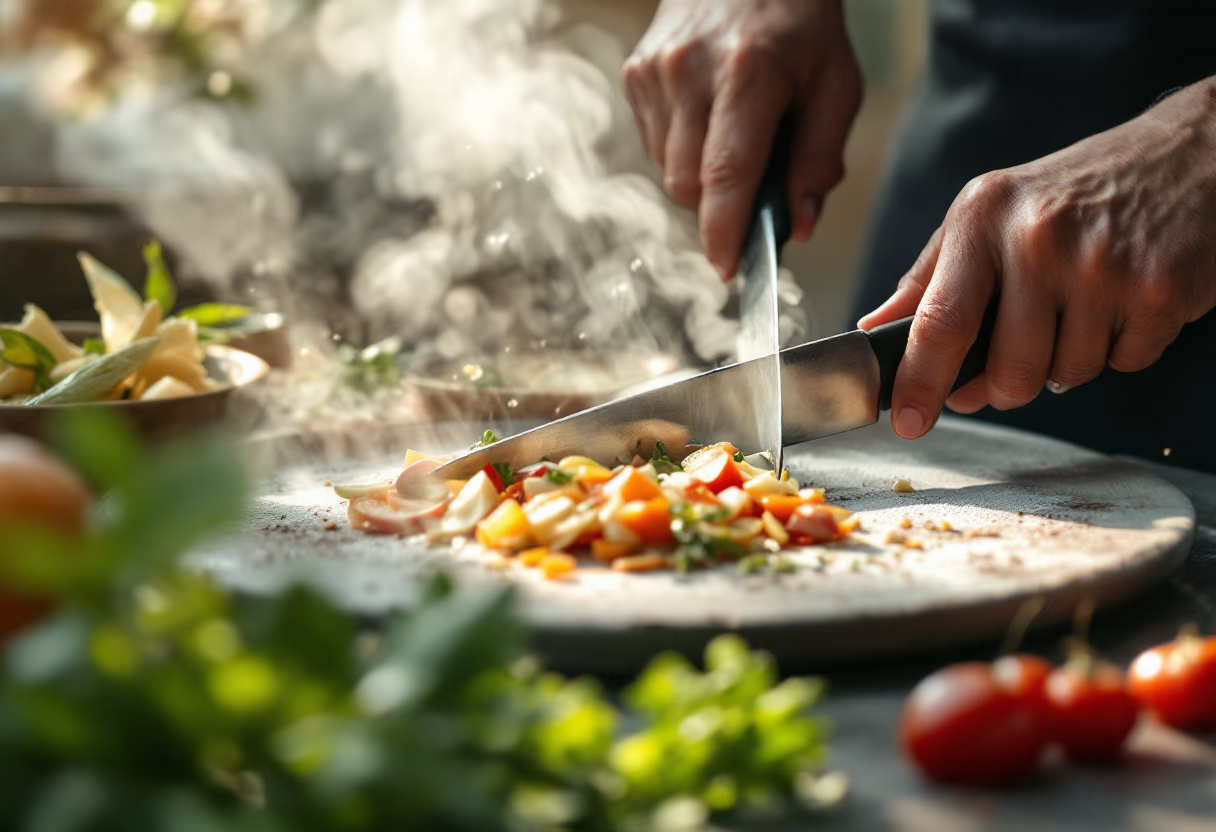
Good knife skills are essential for any home cook looking to enhance their culinary experience. Not only do they improve the speed and efficiency of your cooking, but they also ensure safety and lead to better results in your dishes. Mastering the art of cutting can transform your time in the kitchen from a chore into a joyful and creative process.
Why Good Knife Skills Matter
Having strong knife skills is crucial for several reasons. First, they allow you to work faster, which is especially important when preparing meals for family or guests. Second, proper knife techniques reduce the risk of accidents, as a well-handled knife is less likely to slip or cause injury. Finally, good knife skills lead to uniform cuts, which not only look more appealing but also cook more evenly, enhancing the overall quality of your dishes.
The Three Knives Every Home Cook Actually Needs
While there are many knives available, every home cook should have three essential tools: a chef's knife, a paring knife, and a serrated knife. A chef's knife is versatile and can handle most tasks, from chopping vegetables to slicing meat. A paring knife is perfect for intricate tasks like peeling and trimming, while a serrated knife is ideal for cutting bread and soft fruits without squishing them.
The Correct Way to Hold a Chef's Knife
To hold a chef's knife correctly, grip the handle firmly with your dominant hand, placing your thumb and index finger on either side of the blade, just above the handle. This grip provides better control and stability. Your other hand should be used to guide the food, with your fingers curled under to protect them from the blade. This technique not only enhances your cutting precision but also ensures safety while you work.
The Four Basic Cuts Every Cook Should Know
Mastering four basic cuts will significantly improve your knife skills: slicing, dicing, chopping, and julienne. Slicing involves cutting food into thin pieces, while dicing means cutting it into small cubes. Chopping is a more general term for cutting food into smaller pieces, and julienne refers to cutting vegetables into thin matchstick shapes. Practicing these cuts will give you the confidence to tackle a variety of recipes.
How to Keep Your Knife Sharp
Keeping your knife sharp is vital for both performance and safety. A dull knife requires more force to cut through food, increasing the risk of slipping and causing injury. Regularly honing your knife with a honing steel and periodically sharpening it with a whetstone or professional service will ensure it remains in top condition. Remember, a sharp knife is a safe knife!
As you practice these knife skills, remember that improvement comes with time and repetition. Don't be discouraged by initial challenges; instead, embrace the learning process. With patience and practice, you'll soon be cutting like a pro in your own kitchen!